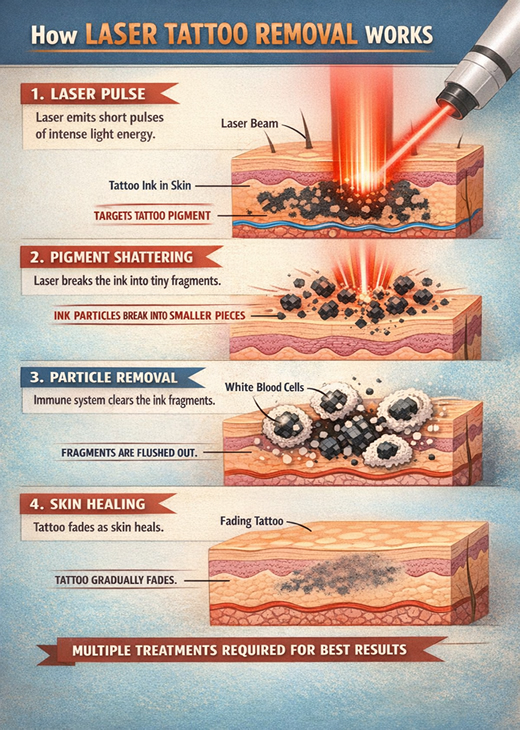
How Laser Tattoo Removal Works
Laser tattoo removal is a medical procedure that uses advanced light technology to break down unwanted tattoo ink safely and gradually. Modern systems are designed to target pigment in the skin without causing significant damage to the surrounding tissue. The process is based on a scientific principle known as selective photothermolysis, which means specific wavelengths of light are absorbed by specific colours while leaving the surrounding skin largely unaffected.
When a tattoo is placed in the skin, ink particles are deposited into the dermis, the layer beneath the outer epidermis. These ink particles are too large for the body’s immune system to remove completely, which is why tattoos are permanent. Laser tattoo removal works by shrinking those ink particles into much smaller fragments so the body can naturally clear them away.
During treatment, a specialised medical laser delivers extremely short pulses of high-energy light into the skin. These pulses last only nanoseconds or picoseconds. The wavelength of the laser is carefully chosen to match the colour of the tattoo ink being treated. For example, black ink absorbs all wavelengths of light, making it the easiest colour to remove. Other colours such as green, blue, or red require different wavelengths to effectively target the pigment.
As the laser energy penetrates the skin, it passes harmlessly through the outer layer and is absorbed by the tattoo pigment in the dermis. The rapid absorption of energy causes the ink particles to heat up and shatter into microscopic fragments. This process happens almost instantly and does not “burn” the tattoo away. Instead, it relies on light energy selectively breaking apart the pigment.
After the ink is fragmented, the body’s immune system begins its role. White blood cells, particularly macrophages, identify the smaller ink particles as foreign material. Over the following weeks, these cells gradually carry the fragmented ink away through the lymphatic system. This is why fading occurs slowly rather than immediately after treatment. Each session breaks down more pigment, and the body continues clearing it in the time between appointments.
Multiple sessions are required because only a portion of the ink can be effectively shattered during each treatment. Tattoos are layered at different depths in the skin, and some particles are shielded by others. Spacing treatments several weeks apart allows the skin to heal fully and the immune system to process the fragmented ink before the next session. On average, most tattoos require between six and twelve treatments, although this varies depending on ink density, colour, size, age of the tattoo, and individual immune response.
Immediately after a session, the treated area may appear white or frosted. This is caused by rapid heating and tiny gas bubbles forming in the skin. Mild redness, swelling, and sensitivity are common but usually subside within a few days. Proper aftercare, including keeping the area clean, protected, and out of direct sunlight, supports healing and reduces the risk of complications.
Modern laser technology has significantly improved safety and effectiveness compared to older removal methods such as dermabrasion or surgical excision. When performed by a trained professional using appropriate equipment, laser tattoo removal can dramatically fade or completely remove many tattoos with minimal scarring risk. In essence, laser tattoo removal works by using precise bursts of light energy to fragment ink particles, allowing the body’s natural healing and immune processes to gradually eliminate the unwanted pigment over time.